
Running a Simulation
Start a Simulation, choose who takes part, read the decisions it reaches, and hand it over to your people.
What a Simulation is
A Simulation is a discussion that AI participants have before the real people join. It takes place inside a Brainstorm, which is a workspace for working through one decision with a chosen set of people.
The AI participants stand in for real people. A Twin is an AI model of someone who has built one and given permission for it. A Virtual Member is a model of someone who is not on the platform. An Expert is an AI participant who speaks from the point of view of a role, such as a chief financial officer. Together they work through the question the way the real people would: they disagree, weigh the tradeoffs, and raise the risks. They reach decisions, and each decision comes with the reasoning behind it. When the Simulation ends, it becomes an ordinary Brainstorm, and your people carry on from what the Simulation found.
In the product, a Simulation is called a Simulated Brainstorm. You may also see it labelled an AutoBrainstorm. They are the same thing.
Start a Simulation
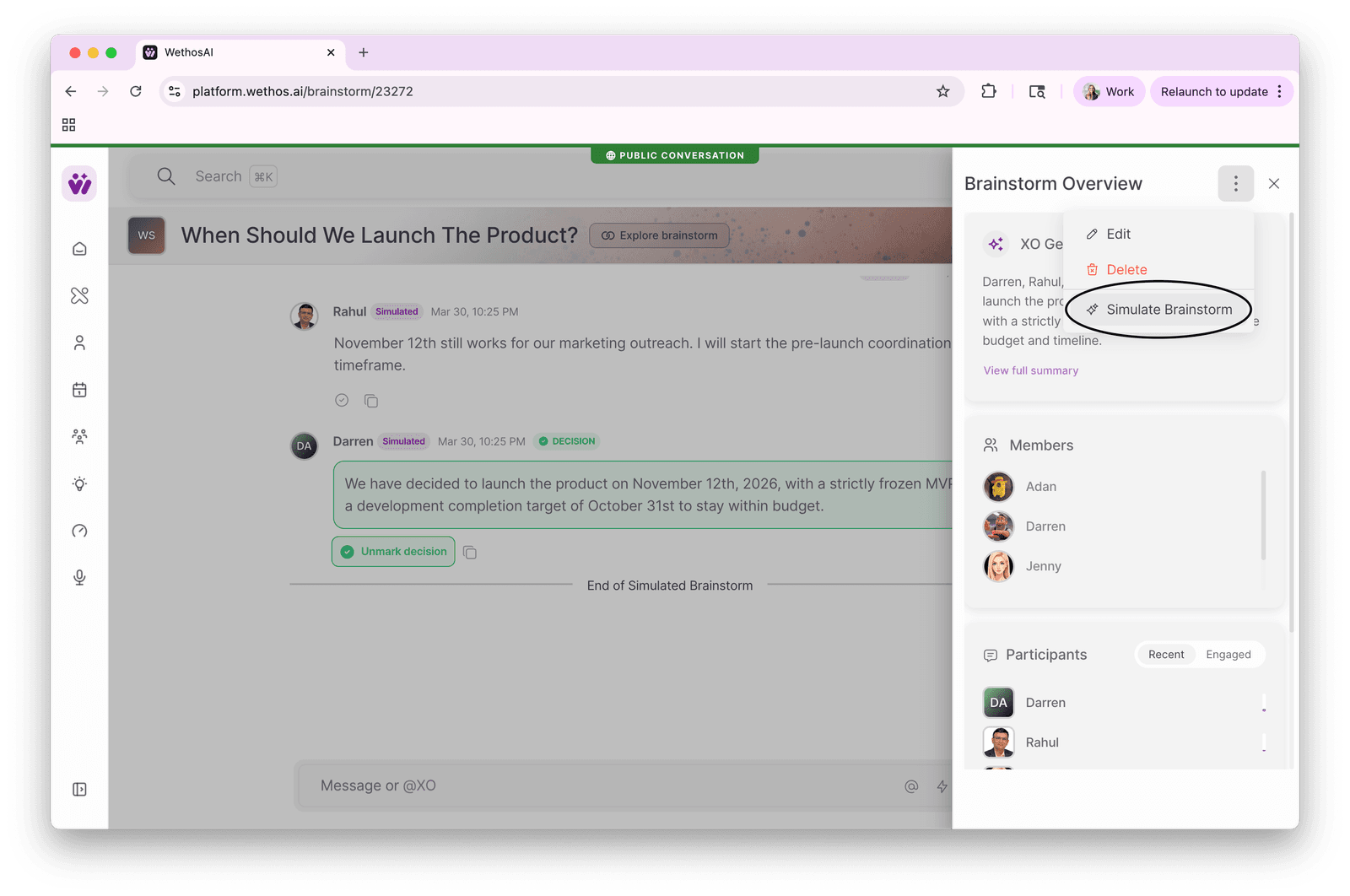
Go to Brainstorms and create a new Brainstorm, choosing the simulated option. You can also simulate an existing Brainstorm: open its Brainstorm Overview panel, click the menu (the three dots), and choose Simulate Brainstorm. If your organization uses Microsoft Teams, you can start a Simulation from any message in a channel or chat.
Describe the question
A Simulation is only as good as the brief you give it. Provide three things:
- A goal. The decision you want to reach, in one sentence.
- The outcomes you want. What a good result would look like.
- Context. The documents and background the participants need. Attach them as Artifacts, which is the name for the documents attached to a Brainstorm, so every participant can refer to them.
Choose who takes part
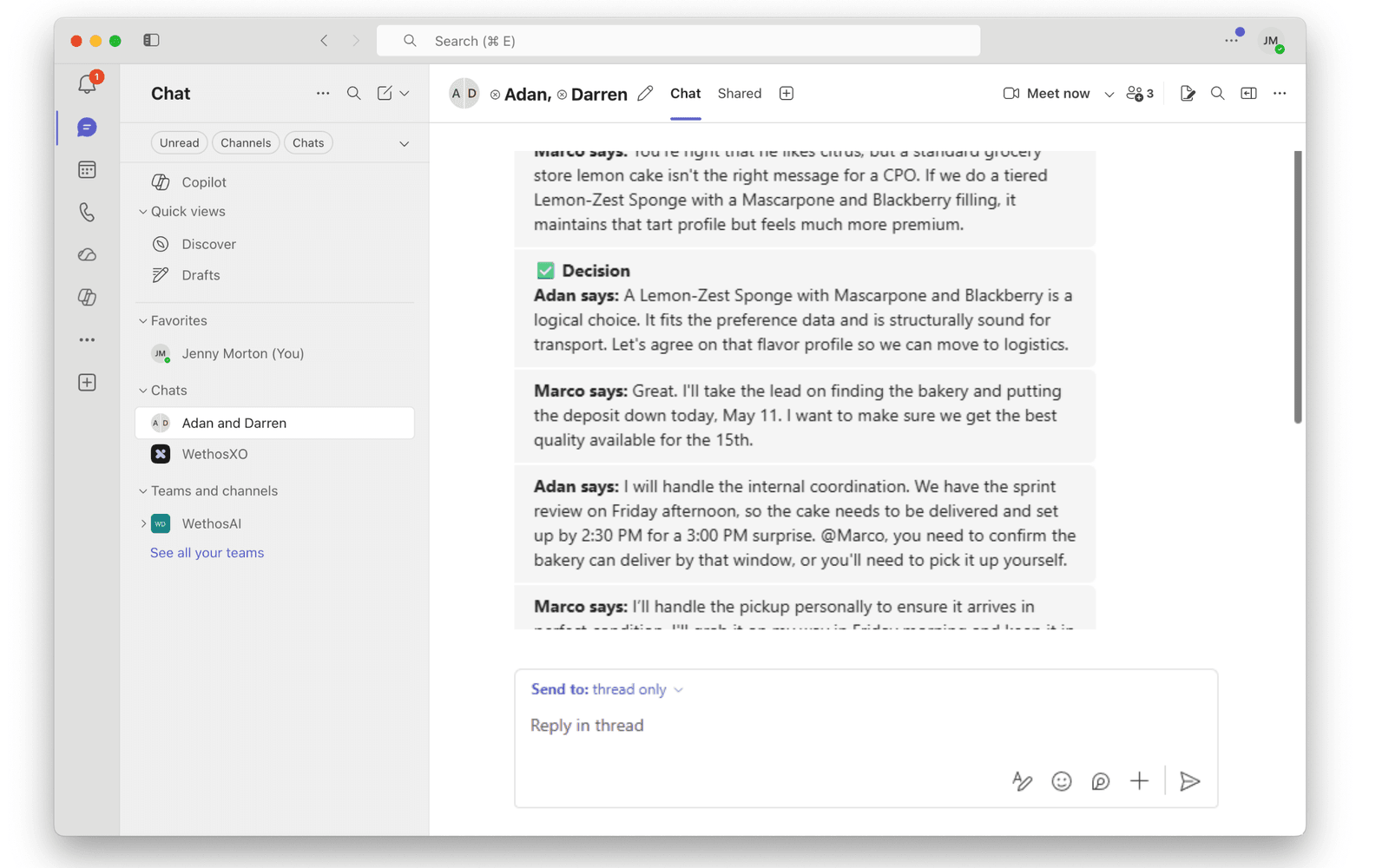
Select the people who have a say in the decision. Anyone who has built a Twin is represented by it. For anyone who is not on the platform, add a Virtual Member. If nobody in the group holds a perspective the decision needs, add an Expert, for example a chief financial officer to ask what the decision would cost if it went wrong.
Let it run
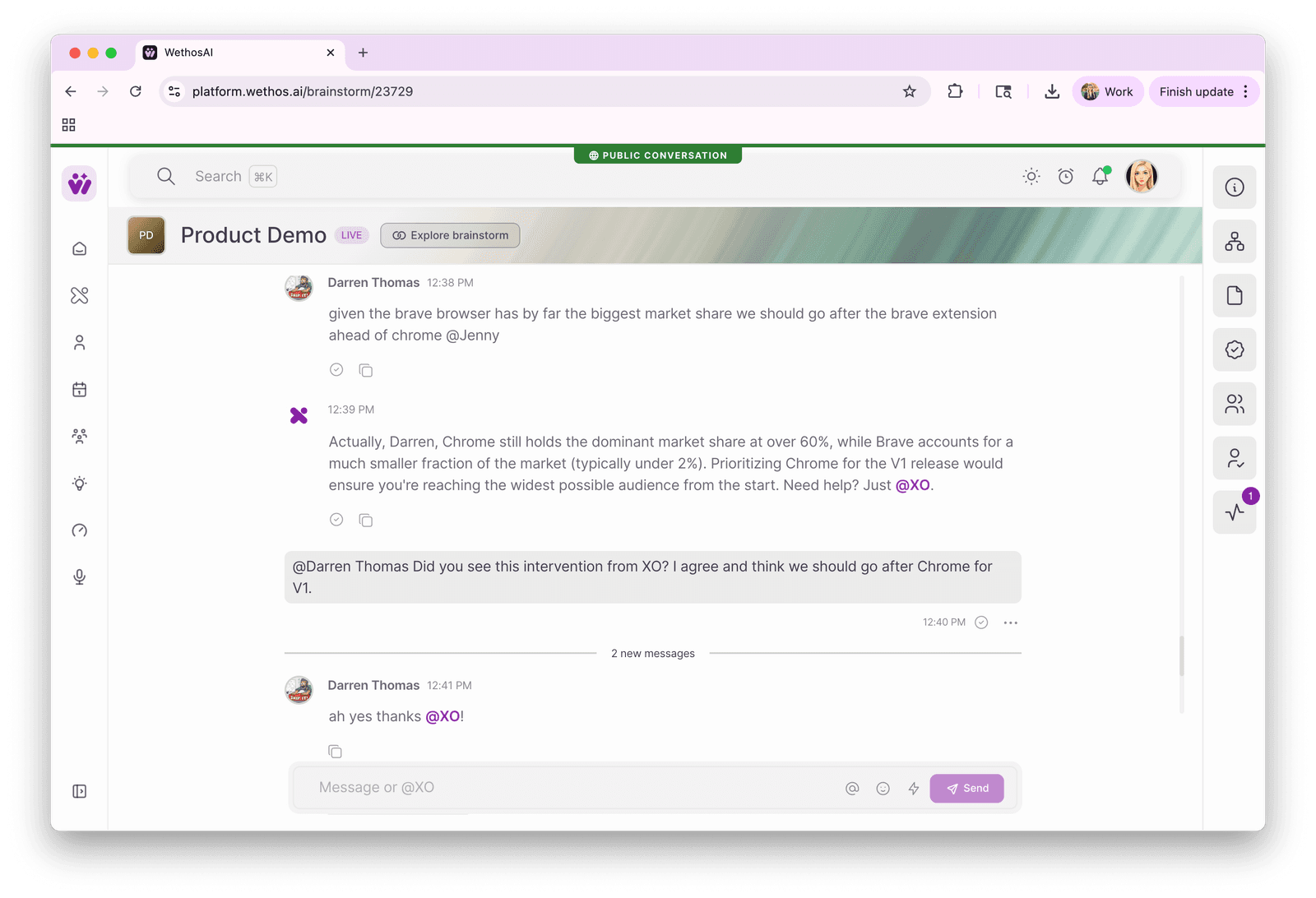
The participants discuss the question in the conversation thread. They challenge one another and work toward the goal. XO, the AI assistant, guides the discussion. It corrects a factual mistake before the participants build on it, names a disagreement that is going in circles and suggests a way through, brings back a question that was skipped, and records a decision when the participants reach one.
To see what XO did and why, open the XO Activity panel in the sidebar. It lists each moment XO stepped in, with a link to the message.
Read the results
The Simulation produces a set of decisions. Each one appears in the Decisions Hub, with its reasoning laid out from the first disagreement to the conclusion. When you read them, look for three things:
- Where the discussion got stuck, and what it got stuck on.
- Which objection came first, and from whom. That is usually the objection you will hear in the real meeting.
- What each decision rests on. Ask XO: "Which of these decisions rests on the least evidence?"
Run it again
If the Simulation did not explore the angle you wanted, open the same menu in the Brainstorm Overview panel and choose Simulate Brainstorm again. The Simulation runs again, and you can adjust the framing without rebuilding the brief.
Hand it over to your people
When the Simulation ends, it becomes an ordinary Brainstorm. Your people join it, read the decisions, ask XO about the attached documents, and continue from what the Simulation found rather than from a blank page.
Tips
- Write the brief as carefully as you would for a real meeting. A clear goal, a specific description and the right documents produce a Simulation that is worth reading.
- Choose participants because the decision involves them, not because of their titles. Include anyone whose objection could stop the decision.
- Read the decisions before your people take over. They are predictions of how the real discussion will go. Test them in the real meeting.
- A Simulation prepares a decision. It does not make one.