
The four dimensions behind a profile
The four dimensions a profile is built on: Ideas, Relational, Action and Order.
Your profile is what WethosAI knows about how you work. It is built from four dimensions. Each one describes one part of how a person handles a decision: how they take in information, whether they pay more attention to the people in a discussion or to the facts, how quickly they want to reach a conclusion, and how they like work to be organized.
The same four dimensions are used everywhere in the platform. Your own profile has them. So does a Twin, which is an AI model of a specific person built with their permission, and so does a Virtual Member, which is a model of someone who has not joined the platform. When XO, the AI assistant, helps you prepare for a meeting, it reads the profiles of the people involved to predict how each of them is likely to respond.
Two things are worth saying before the definitions. A profile is not a personality type and it is not a score. And there is no best position on any dimension. Each one describes a tendency, and most people move along the range depending on what is at stake.
Ideas
The Ideas dimension describes how someone takes in information and how they explain an idea to others. The range runs from Visionary to Practical.
A visionary thinker starts with the whole picture and fills in details later. A practical thinker wants the specifics first. You can see the difference in how each makes a case. One gives a short summary; the other gives the full story. One asks "what else could we do?"; the other asks "how exactly would this work?"
This dimension is not a measure of creativity. Practical thinkers have as many ideas as visionary ones. They arrive at them by a different route.
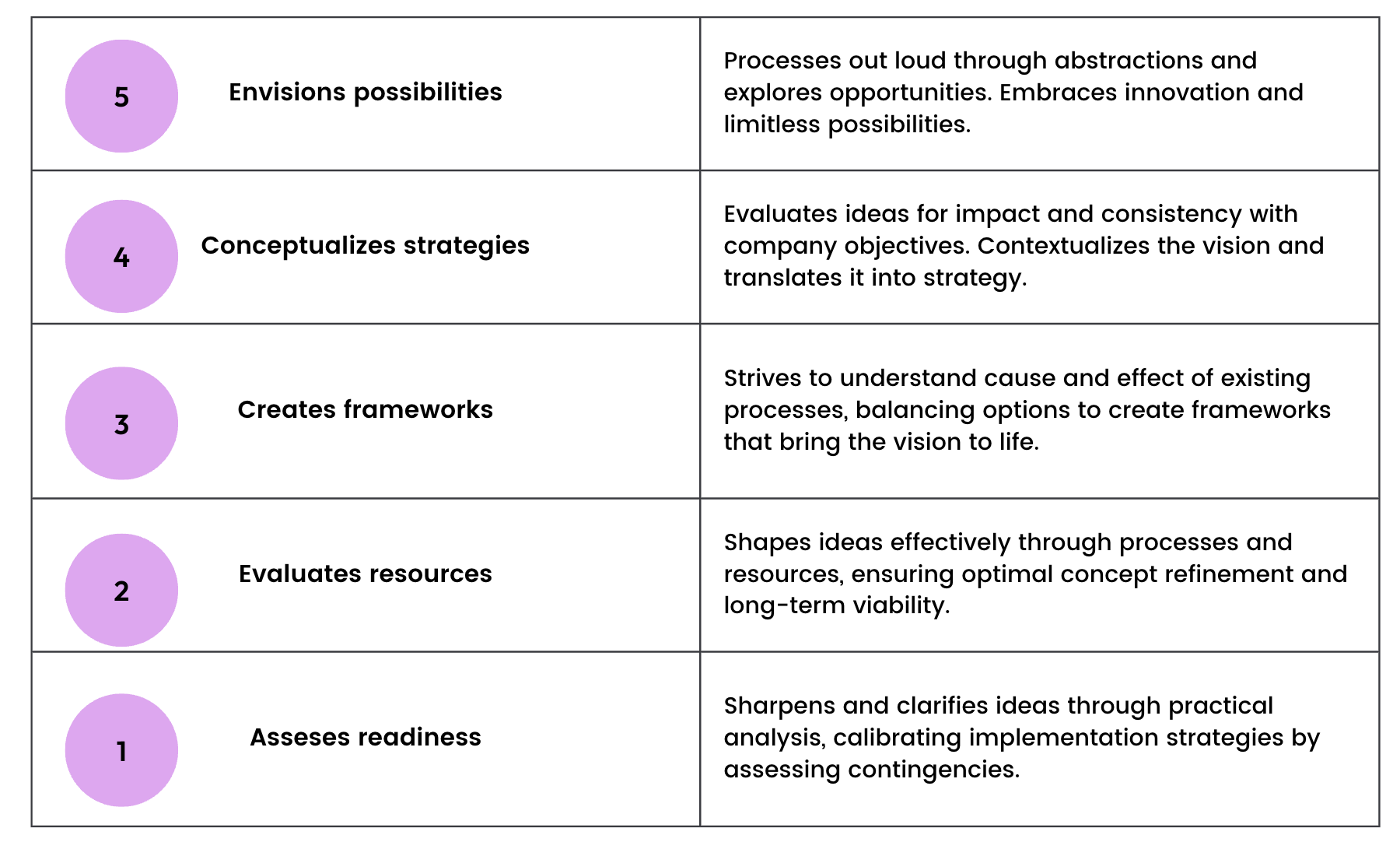
The chart below shows the five positions on this dimension. Position 5 is the most visionary and position 1 the most practical, with the working habits typical of each.
Relational
The Relational dimension describes how much attention someone gives to the people in a discussion, compared with the facts of it. The range runs from Interpersonal to Factual.
In a meeting, an interpersonal person notices how a proposal is landing with the others before they respond to it. A factual person answers the question as it was asked and looks at the numbers first.
This dimension is not a measure of empathy or emotional intelligence. It describes where someone's attention goes first, not how much they care.
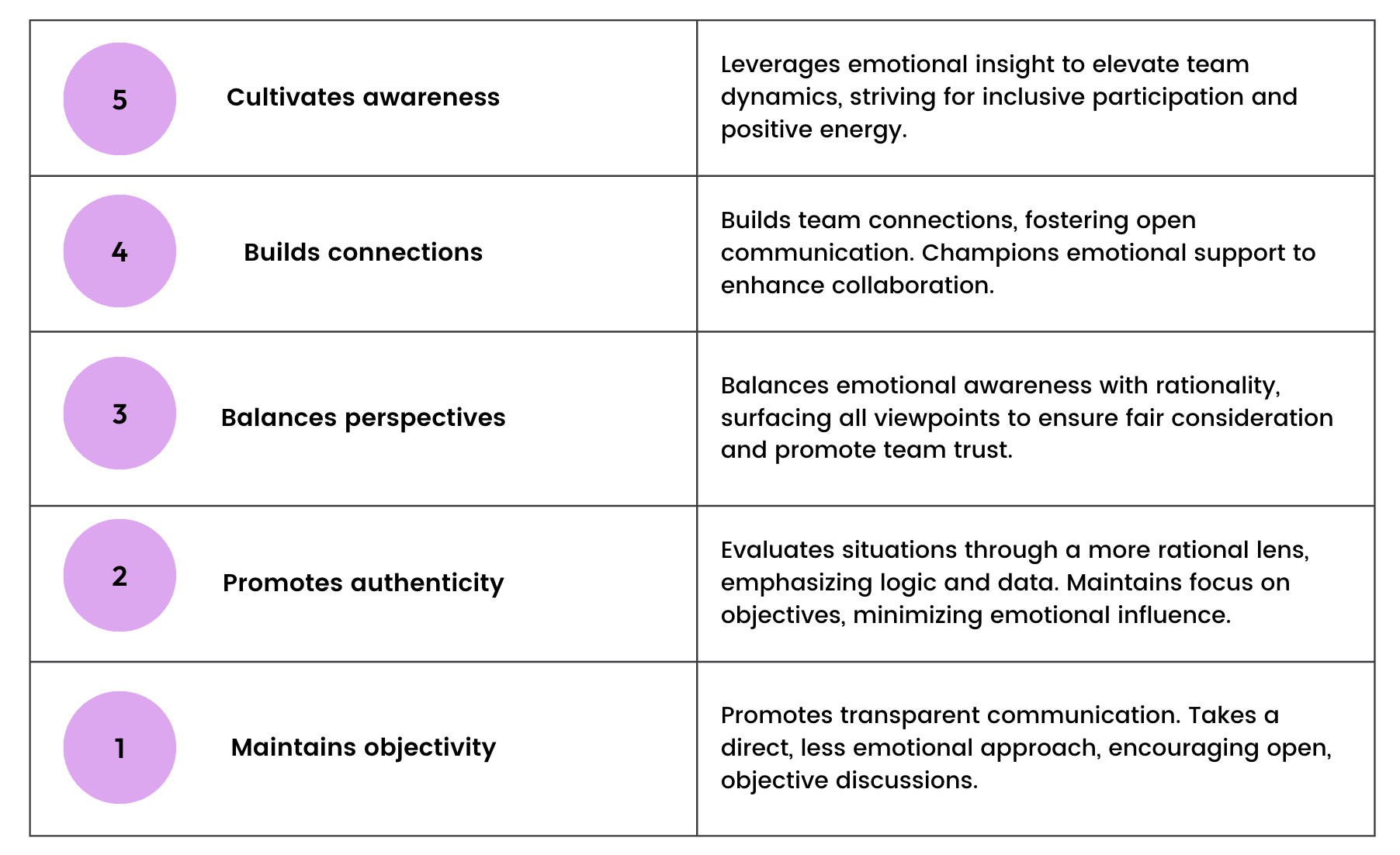
The chart below shows the five positions. Position 5 is the most interpersonal and position 1 the most factual.
Action
The Action dimension describes how someone pursues a goal and how much urgency they feel to reach a conclusion. The range runs from Expedient to Methodical.
An expedient person asks "is it done?" A methodical person asks "is it working properly?" The difference shows in the pace someone sets, in whether they direct others toward the goal or take on the work themselves, and in how soon they want the decision made.
This dimension is not a measure of leadership. People at both ends lead. They lead at different speeds.
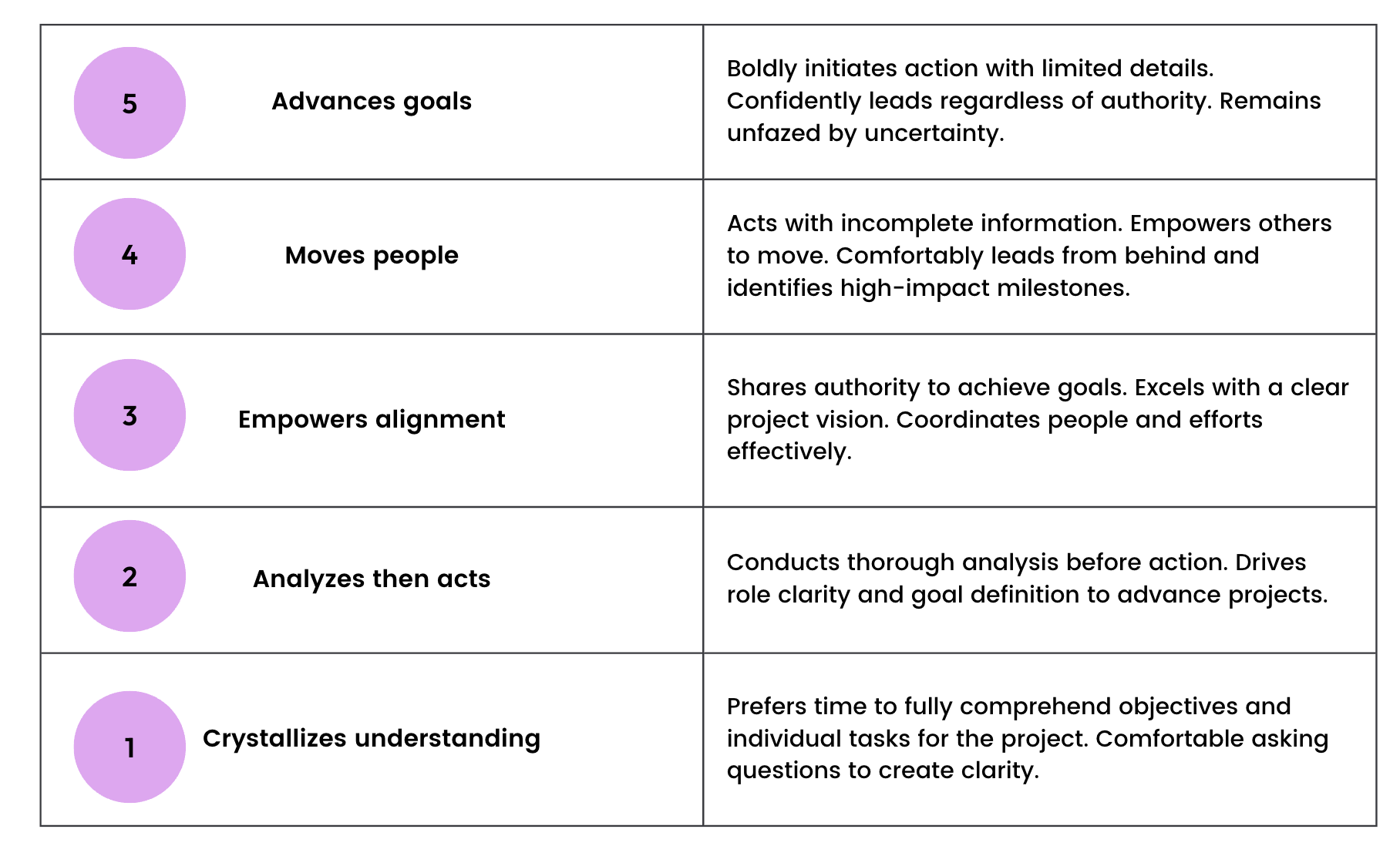
The chart below shows the five positions. Position 5 is the most expedient and position 1 the most methodical.
Order
The Order dimension describes how someone structures work and how they decide when it is finished. The range runs from Structured to Flexible.
A structured person wants the process followed and the plan complete before anything moves. A flexible person wants room to adapt the plan as they go. The difference also shows in how closely someone stays involved with the details, and in how finished a piece of work needs to be before they are ready to move on.
This dimension is not a measure of organizational skill. Flexible people finish things too. They get there by a different route.
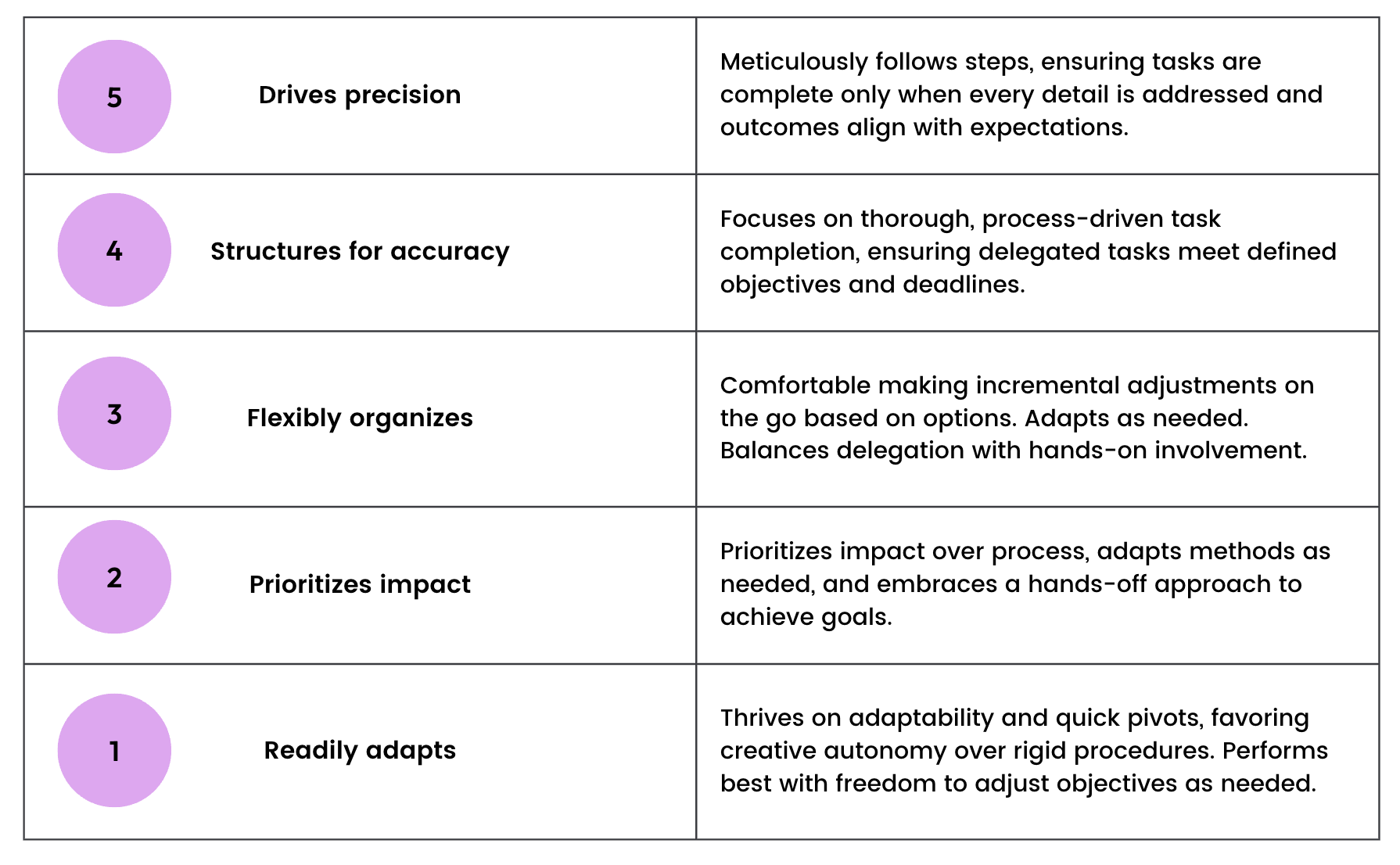
The chart below shows the five positions. Position 5 is the most structured and position 1 the most flexible.
How the four dimensions are used
The four dimensions are the foundation of a profile. On top of that foundation, WethosAI adds a second layer of detail drawn from approved context, meaning the documents, conversations and history a person has shared, or that an organization is allowed to use. That second layer is where a profile's traits and tendencies come from, and it is what makes a Twin more specific than a summary across four ranges.
A profile describes how someone tends to work. It does not describe who they are. The platform uses it to help you prepare for a conversation, never to rank the people in it.
Where your own profile comes from, and how to update it, is explained in Building and updating your profile.